
The art and antiques market loves simple answers. Owners want to hear one number. Preferably fast, free of charge, without the need to speak to an expert, without “bothering” with documents. This is where online calculators, price comparison tools, automated “valuations” on auction platforms, and today’s fashionable “AI price checks” appear. They promise a verifiable, objective value — ideally in a matter of seconds.
But art and antiques are not a market in which “price” results from a table. They are a market in which price results from risk, quality, context, and evidence. And these elements — in most cases — are invisible or unquantifiable for an algorithm. The problem is not that technology is bad. The problem is that the world of unique objects is not a world of mass data.
That is why online valuations fail so often: not because “AI makes mistakes,” but because it is given a task for which the art market was never designed.
1) An online price is often an event, not a value
Most online tools operate on what is publicly available: auction results, asking prices, sometimes data from sales platforms. This sounds logical — if a similar object sold, it can be compared.
But market data in art is uneven. An auction price is the result of a specific event: a specific day, a specific room, a specific emotional dynamic among bidders. An asking price may be the seller’s wish. A “sold” price on a platform may mean a discounted transaction, a bundled deal, an exchange, or a sale after long negotiations — which the algorithm cannot see.
Professional valuation begins where simple “price comparison” ends: with the question of what that number actually means, under what conditions it was created, and whether it has any predictive value at all.
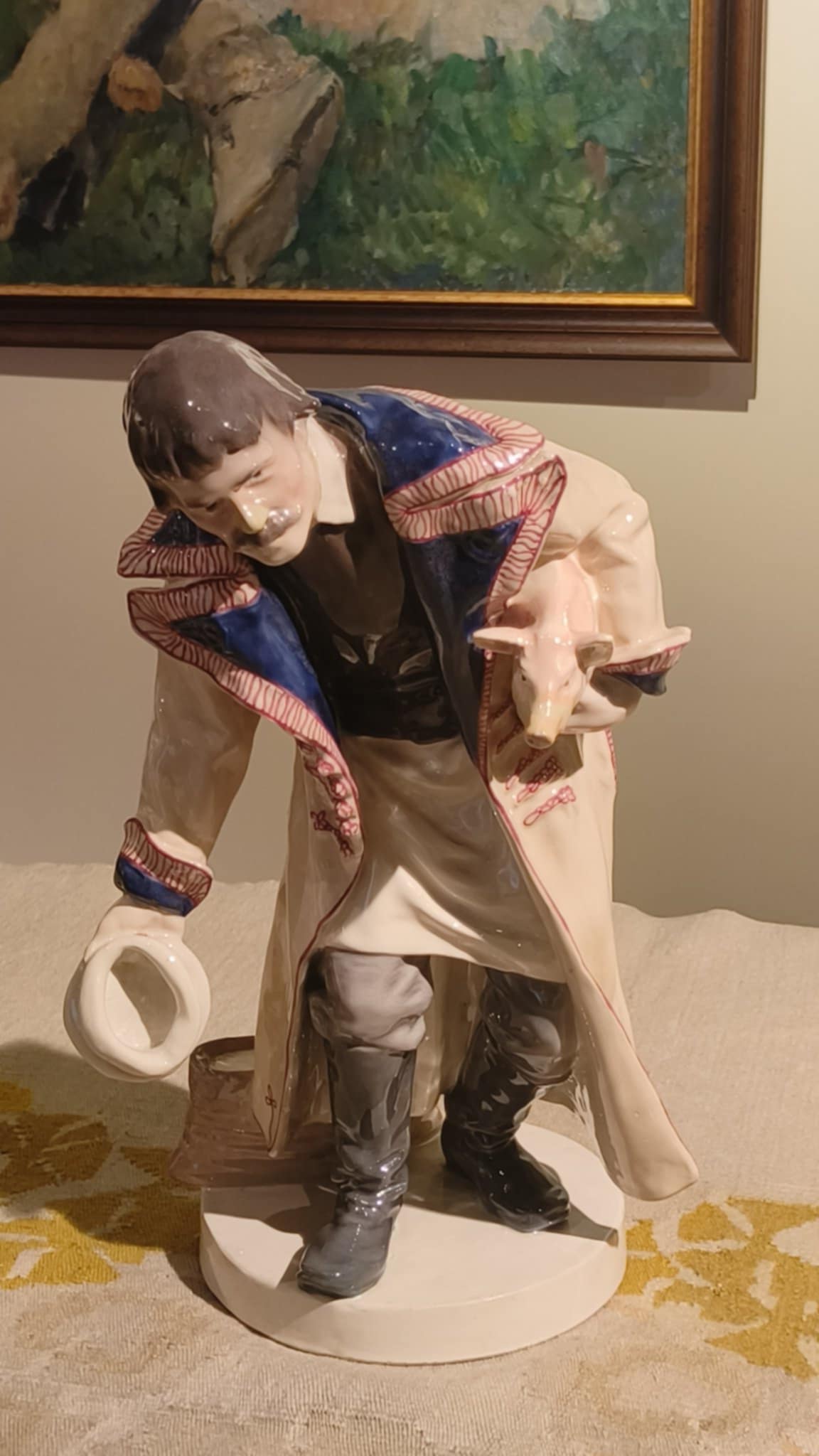
2) A “similar object” in art is almost never similar
Algorithms like categories. Art and antiques live in nuance.
For the internet, “oil painting, landscape, 19th century” sounds like a reasonable comparison group. For the market, it can mean three entirely different price worlds.
The details that determine value are often subtle, but financially brutal:
- quality within the same artist’s oeuvre (outstanding work versus secondary),
- period (early, mature, late),
- condition (retouching, overpainting, cleaning, losses),
- provenance and documentation,
- format, subject, technique in a collector’s sense, not a descriptive one,
- market context (whether a given type of object is “on the rise” or declining).
In practice, “similarity” is judged by eye and experience, not by database labels. Algorithms compare tags. The market compares quality.
3) The algorithm does not see condition — the market sees it first
The greatest gap in online valuations is condition. Because condition is what most often:
- is not described reliably,
- is described using euphemisms (“minor abrasions,” “signs of age”),
- requires in-person assessment or specialized lighting,
- reveals itself in details invisible in standard photographs.
Two objects may look identical on screen, yet be separated on the market by a gulf in value: one is stable and acceptable, the other requires costly conservation or contains interventions that lower its collector-grade status.
An algorithm usually cannot calculate this because it lacks input data. And even if it has data, it relies on descriptions that are often written “for sales,” not analytically.

4) Provenance: AI reads a story, the market demands evidence
Online valuations like “stories.” Art does too — but only when the story can be proven.
Provenance without documentation is a narrative. For the owner, it may be true. For the market, it is risk. And risk lowers willingness to pay.
Language models can beautifully structure a story, summarize descriptions, extract “important names” from text. But this is still work on words, not facts. The market pays for:
- continuity of ownership,
- archival sources,
- catalogue raisonnés,
- references in literature,
- exhibition documentation,
- authentication confirmations.
When these are missing, an “AI price check” often produces a number that sounds reasonable, but fails the test of a professional buyer.
5) The art market has little data, many exceptions, and high noise
In industries like electronics or automotive, algorithms thrive: many identical products, many transactions, stable parameters.
Art is the opposite:
- objects are unique or semi-unique,
- parameters are described inconsistently,
- data is fragmented (many private transactions are invisible),
- asking prices are deliberately manipulated,
- different markets (auction, dealer, private) produce different numbers.
This means that an “average” is often an illusion, and a “typical price” frequently does not exist. Algorithms average. The market stratifies.

6) The most dangerous error: the illusion of certainty
The biggest problem with online valuations is not that they are inaccurate. It is that they appear accurate.
A number presented with a veneer of objectivity gives the owner false security. Then disappointment follows:
“Why does the auction house suggest less?”
“Why won’t the dealer pay that much?”
“But the internet showed a higher value…”
This leads to emotional interpretations of the market: that someone is “undervaluing,” “manipulating,” or “cheating.” Often, however, it is simply a conflict between a number generated without context and a number calculated with risk and real marketability in mind.
7) When online tools are useful — and how to use them without harm
It is not that online data is useless. It is valuable when used as:
- preliminary category reconnaissance,
- checking whether an artist or object type appears on the market,
- identifying similar motifs and formats,
- building a “comparison map,” not a single number.
But when the stakes involve sale, inheritance division, insurance, collateral, legal disputes, or investment — an online “AI price check” stops being a tool and becomes a risk.
Conclusion: an algorithm calculates what can be calculated. The market pays for what can be defended
Art and antiques are a market of financial decisions in a world of unique objects. Here, the winner is not the one with the fastest number. The winner is the one with the most defensible argument: based on quality, condition, provenance, comparisons, and the real sales channel.
The internet can suggest a direction. But it should not dictate value.
If you want to know the real value of your object in the current market — check the valuation at ArtRate.art.