– and why its presence can be misleading
Signature is one of the most overvalued elements of an object on the art and antiques market. For many owners it is almost synonymous with value: if there is a signature, then it “must be the original,” and if it is the original, then it “must be expensive.” Yet from the perspective of market practice, a signature is just as often an asset as it is a liability — and in many cases it has no real significance for valuation at all.
The problem is that the art market does not treat a signature as proof, but as one of many signals that require interpretation. And that interpretation is rarely intuitive.
Where the belief in the “magic of the signature” comes from
Faith in the absolute importance of a signature has its roots in simplified educational and commercial messaging. In popular circulation, a scheme has taken hold: signature = authorship = value. It seems logical at first glance, but it is completely inadequate to the realities of the antiques and art market.
Historically, signing works was neither common nor understood uniformly. Many artists did not sign their works at all; others did so only occasionally; still others used different forms of marking: monograms, workshop marks, or later inscriptions. In the decorative arts and in old master art, a signature was often not an expression of authorship in today’s sense, but a practical workshop element — or even a later addition.
When a signature is truly important
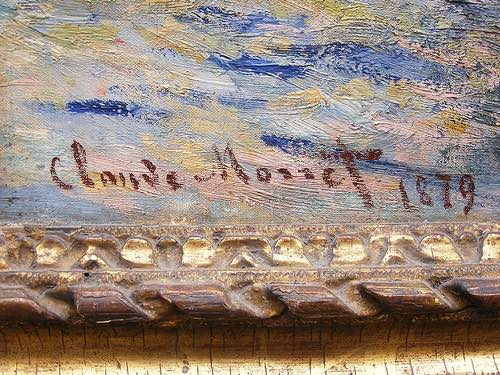
A signature has market significance only under specific conditions. Above all, it must be consistent with the practice of a given artist or workshop. If an artist signed their works regularly and in a recognizable manner, the presence of a signature that is formally and chronologically consistent can strengthen an object’s credibility.
The key point, however, is that a signature never works in a vacuum. The market always assesses it in relation to:
- style and quality of execution,
- technology and materials,
- dating,
- provenance,
- comparisons with undisputed objects.
Only when all these elements form a coherent whole does the signature stop being decoration and start becoming an argument.
When a signature has no meaning at all
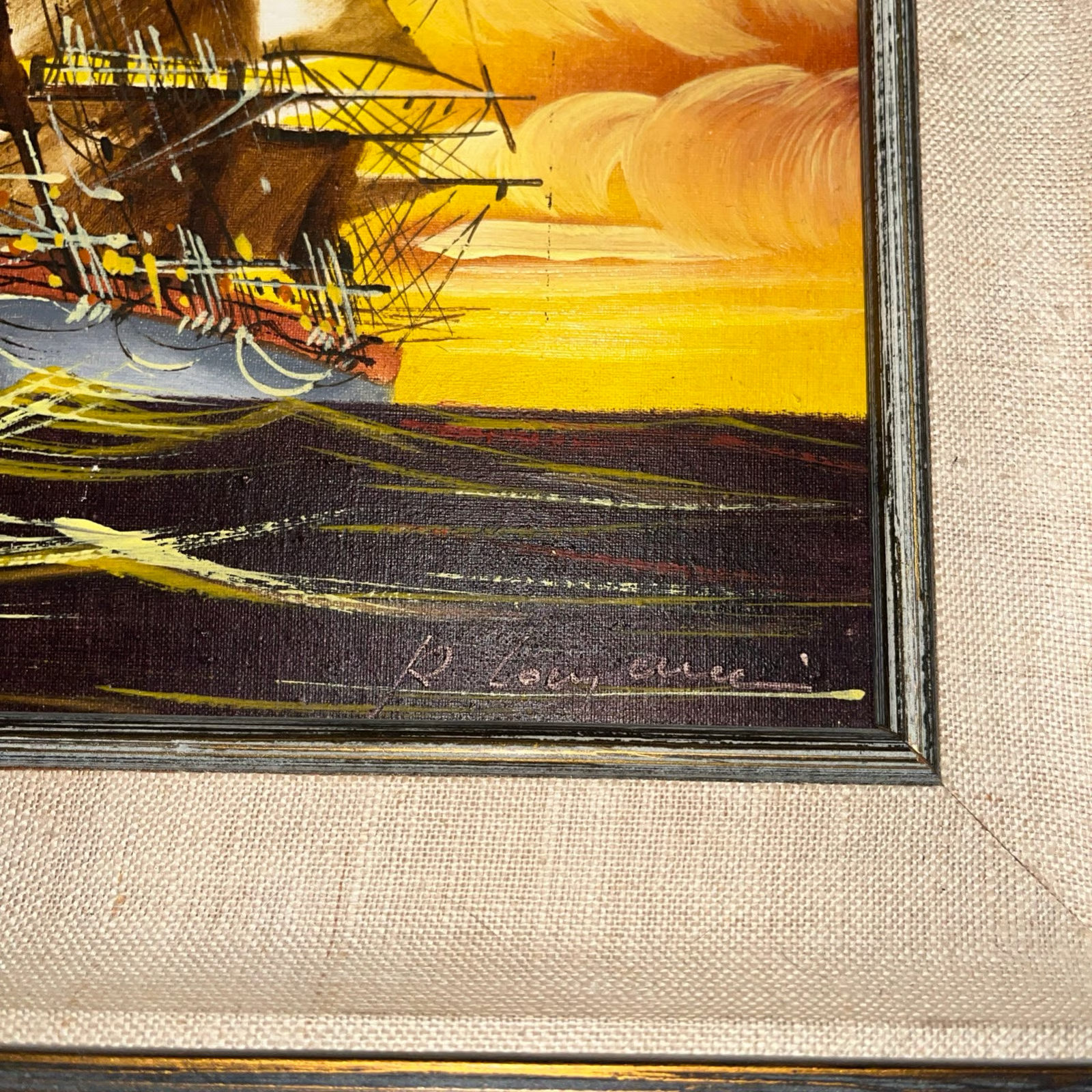
Contrary to owners’ expectations, in a huge number of cases a signature does not increase an object’s value at all. This applies especially when:
- the author is not recognized on the market,
- the signature appears on mass-produced or workshop objects,
- the signature is undocumented in the literature,
- there are no market comparisons whatsoever,
- the quality of the object does not match the level attributed to the author.
The market does not pay for a name in itself. It pays for certainty, quality, and the possibility of further circulation. A signature that does not provide these elements becomes neutral — and sometimes even problematic.

A signature as a source of risk, not a guarantee
One of the biggest paradoxes of the market is that the presence of a signature can reduce an object’s attractiveness. This happens when the signature raises doubts: it is atypical, executed by a different hand, added later, or does not fit the rest of the work.
For a professional buyer, such a signature is not an advantage but a warning signal. It introduces risk: of authenticity, legal liability, and difficulty in resale. As a result, an object with a “suspicious” signature can be less attractive than an analogous unsigned object that is formally and stylistically clean.
Why the market trusts quality more than the signature
In the long run, the art market rests on quality, not on declarations. A signature is a declaration — quality cannot be declared; it must be demonstrated. That is why objects of outstanding artistic level, even without a signature, can achieve stable and high prices, while average works with an impressive signature remain in the decorative circulation.
A professional valuation begins not with the question “is there a signature,” but with the question: does the market understand this object and want to pay for it. The signature is only one of many elements in that answer.
Summary
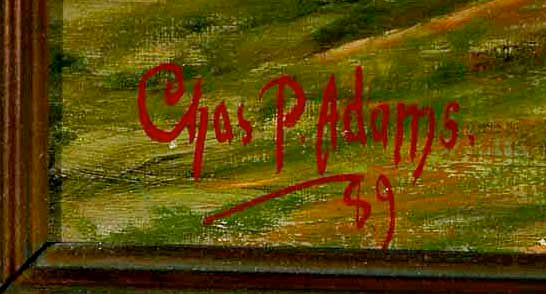
A signature is neither proof of authenticity nor a guarantee of value. It is an interpretative tool that works only in a specific context. Detached from quality, provenance, and market comparisons, it can be misleading — especially for owners who treat it as the main argument for value.
A mature art market does not ask, “is there a signature?” It asks: can this object be defended. And it is precisely this difference that determines real value, not the presence of a name in the lower right corner.
Check whether this article is suitable for the ArtRate.art blog.