On the art and antiques market, the most expensive losses rarely result from a “bad auction” or unsuccessful price negotiation. In practice, most value leaks away earlier — at home, in storage, in emotions, and in haste. An owner who stores a painting, sculpture, or historic object for years often, without realizing it, performs a series of actions that are a signal of risk to the market. And the market, as we know, does not pay extra for risk. It prices it down.
Below are the most common mistakes that lower value even before an object reaches a dealer, an auction house, or a private sale — and that can be irreversible.
1) “Home conservation,” i.e., touching up that destroys
This is one of the most expensive myths: “I’ll refresh it so it looks better.” In practice, the market does not pay for “prettier,” but for authentic and readable.
DIY cleaning of paintings, waxing furniture, polishing silver, gluing porcelain, or touching up losses with paint from a hardware store can:
- destroy the original layer (patina, glazing, gilding),
- introduce irreversible interventions,
- make professional conservation difficult or disqualify it,
- in the worst case, turn the object into “after amateur conservation” — in market terms: a problem.
The market tolerates dirt and natural aging better than traces of unprofessional repair. Dirt can be removed according to the craft. Bad touch-ups often remain forever.
2) Lack of documentation — because “after all, it’s from grandma”
Provenance is not a story told at the table, but a history that can be proven. Selling without documents does not have to mean the object is bad — but it does mean the buyer takes on more risk. And risk has a price.
Common owner mistakes include:
- throwing away old receipts, warranty cards, correspondence,
- having no archival photos of the object,
- no record of where the object came from and when it entered the family,
- ignoring labels, stamps, and notes on the reverse.
Documentation does not have to be perfect. But its absence can lower value faster than a minor aesthetic flaw.
3) Too-quick attribution based on a signature
A signature tempts with simple logic: “there is a signature, so I know the author.” The market works the other way around: a signature is a hypothesis that must be defended.
Owners often present an object as “certain” — without grounds, comparisons, or verification. For a professional buyer, this is an alarm signal. Absolute certainty without proof breeds distrust, and distrust eats the price.

4) Photographing and describing an object “like on OLX”
In the age of online sales, presentation is part of value. Not because a pretty photo makes the object better, but because a bad photo makes it risky.
Typical mistakes:
- low-quality photos, in shadow, taken at an angle,
- no photos of details, the signature, the reverse, the underside, marks,
- no dimensions, scale, technique, or condition information,
- emotional descriptions (“beautiful,” “unique”) instead of factual ones.
The market buys what can be assessed. If it cannot be assessed, it buys cautiously — or not at all.
5) The wrong way of storing — silent damage, but the most expensive
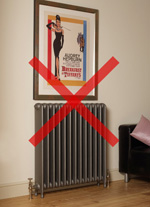
Humidity, sunlight, extreme temperatures, cigarette smoke, kitchen fumes — these are enemies of value. Owners often do not notice the damage because the process is slow. The market sees it immediately.
Typical situations:
- a painting above a radiator or in a bathroom,
- a wooden sculpture in direct sunlight,
- porcelain displayed too tightly or exposed to vibration,
- silver stored in materials that accelerate corrosion.
This is not “romantic patina.” For the market, it is simply a lowering of class.
6) “I’ll sell quickly because there’s an opportunity” — haste as the biggest cost
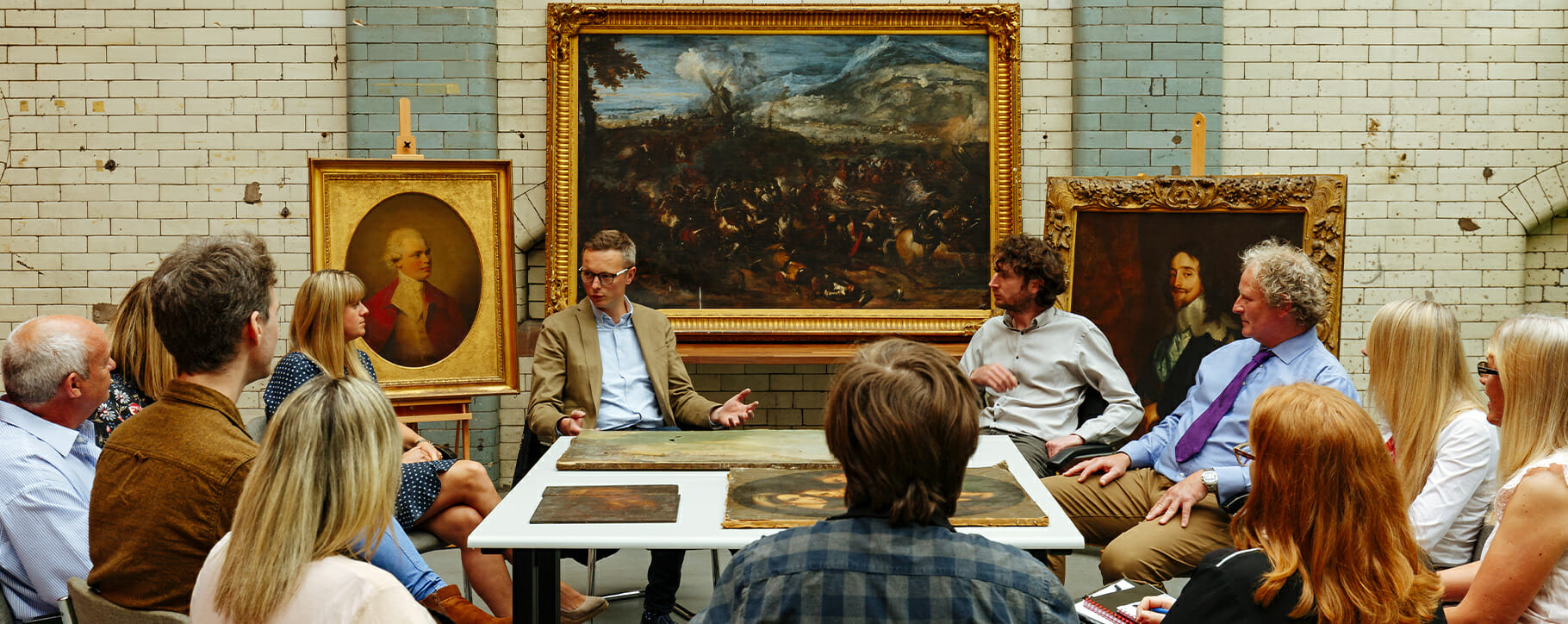
Haste in art works like a discount in a shop. It signals that the seller is not in control.
Usually this means the owner:
- has not verified the market,
- has not built comparisons,
- has not chosen the best channel (auction vs private sale vs gallery),
- has not optimized the net result.
Time is a tool. Lack of time is a discount.
7) Overexposure — “first I’ll show it everywhere”
Sending the same object to multiple auction houses, dealers, and social media groups — often without controlling the message — causes the object to circulate. It stops looking like an offer and starts looking like a problem to liquidate.
The market does not like objects that “everyone has already seen.” It works like a quiet stamp: if no one bought it, something must be wrong. Even if it
wasn’t.
8) Lack of strategy: selling without answering “who needs this?”
The mature question is not “how much is it worth?” but where that value is to be realized.
The same object can have a different price:
- on the local vs international market,
- at auction vs private sale,
- for a collector vs a decorator,
- with full documentation vs without it.
An owner who does not understand for whom their object is sells it randomly. And chance is the most expensive adviser.
Summary
The value of a work of art does not fall only when the market worsens. Very often it falls earlier — through the owner’s actions: touch-ups, lack of documents, poor display, haste, weak presentation, and selling without a strategy.
The best practice is surprisingly simple: do not fix, do not rush, do not guess — document, protect, and verify. In the art market, the most expensive mistakes are those that look like “small improvements.”
If you want to check whether your actions are lowering the value of an object even before a sale, professional appraisal and a recommendation of the circulation channel are usually cheaper than the consequences of one mistake.
Check whether this article is suitable for the ArtRate.art blog.