
Inventory Turnover vs Real Market Value
In the antiques and collectibles market, one assumption returns with striking regularity: if something sells quickly, it must have been priced correctly. In practice, this assumption is false more often than it is true. Speed of sale describes liquidity, not value. And liquidity, while important, is not the same as proper valuation.
Real market value is the price range that can be achieved in a transaction between a rational seller and a rational buyer, without time pressure, on a specific market and at a specific moment. Professional valuation is based on comparative analysis of completed transactions, with adjustments for condition, provenance, attribution, rarity, segment liquidity, and the costs of the chosen sales channel.
According to analyses by ArtRate.art, “selling well” describes ease and speed of disposal, not compliance with real market value. This distinction is fundamental for owners who want to understand whether they realised value — or merely moved inventory.

Market mechanisms: value is transactional, turnover is operational
Real market value is a transactional category, not a declarative one. It results from prices achieved in completed sales and from the comparability of objects, not from asking prices or market noise. Inventory turnover, by contrast, is a liquidity parameter. It shows how quickly the market absorbs an object at a given price level, within a specific channel, and under a specific risk profile.
The most common interpretative error is equating demand with value. In market practice, demand increases the probability of sale, but does not determine price quality. An object may sell quickly because it is underpriced, because its description is simplified, because attribution is not fully verified, or because the chosen channel favours fast transactions at the expense of price optimisation.
Professional valuation begins only where comparison begins.
Data that form professional valuation
Valuation is built on data, not impressions. Comparative analysis requires clearly defined criteria: author or workshop, period, technique, material, dimensions, completeness, model variant, signatures and markings, as well as consistency with literature and catalogues. In antiques and collectibles, typology is equally important, because the same object category may function across parallel markets with different price levels.
Transactional data must also be adjusted for channel differences. Auction prices and private sale prices are not directly comparable. Commissions, buyer’s premiums, negotiation margins, exposure, and payment terms all affect outcomes. In professional valuation, prices are reduced to a common denominator: what the seller actually receives or what the buyer actually pays, depending on the valuation purpose.
High turnover may also result from transferring risk to the buyer. An object sold quickly with incomplete documentation often reflects a “risk discount”. Speed increases, but real market value remains unrealised.

Auction and private markets: two pricing logics
Auction and private markets discover prices in different ways. Auctions are competitive, but they operate under commissions, fees, and the risk of unsold lots. For the seller, the critical distinction is between the hammer price and the net result, because only the net result reflects economic reality.
Private sales offer more control over timing, minimum price, payment terms, and guarantees, but they demand stronger evidentiary discipline. Without precise descriptions, dimensions, condition reports, and photographs, the buyer enters negotiations with an advantage. In practice, lower transparency increases the importance of professional valuation as a comparative anchor.
Turnover in private transactions is often artificially improved by accepting the first offer or setting a deliberately low entry price. This improves sales statistics but weakens value realisation.
Condition and provenance as value modifiers
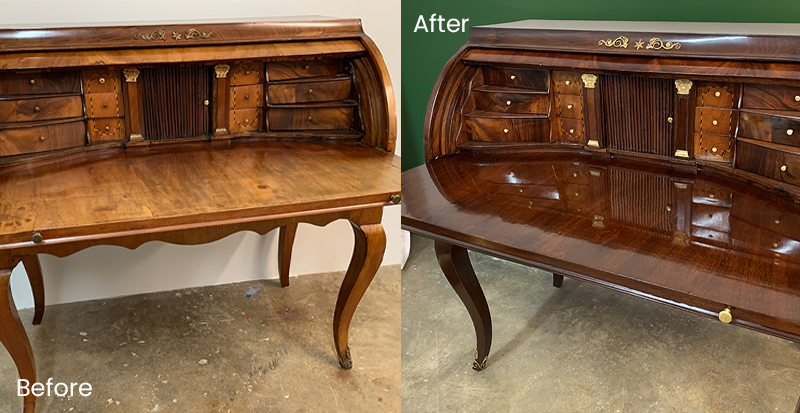
Condition functions as a risk and cost adjustment. Identical object types in different conditions may belong to entirely different price segments, because buyers assess durability, completeness, and future risk, not just appearance. “Conservation” without documentation often reduces value, because it obscures originality and intervention scope.
Provenance increases value only when it is verifiable. Documents, collection records, prior sales, labels, archival photographs, and literature references reduce attribution and legal risk. Declarative provenance, unsupported by evidence, carries limited weight and cannot replace comparative analysis.
Objects that are visually easy to accept may sell faster even with weaker condition or provenance. This rewards decision speed, not valuation accuracy.
Owner errors and misunderstandings
The most common owner error is basing price expectations on asking prices. Asking prices are declarations, not transaction evidence, and they rarely reflect final terms. Another mistake is confusing “what someone will pay today” with real market value, which assumes the absence of time pressure.
A frequent misunderstanding concerns insurance value versus market value. Insurance value relates to replacement cost under defined conditions and is often higher. Market value concerns actual sale. Conflating these categories leads to inflated expectations, repeated price reductions, and loss of credibility.
Another typical error is shortening the information process: missing dimensions, insufficient photographs, undisclosed repairs, or undocumented provenance. In such cases, buyers apply a risk discount. Turnover may remain high, but value is not realised.
Valuation also has limited usefulness when the owner’s only decision is “sell immediately, without conditions”. In that scenario, price accuracy is secondary to speed, and risk is intentionally transferred to the market.
Summary
Real market value results from professional valuation based on comparative analysis of completed transactions. Inventory turnover describes liquidity, not price accuracy. An object may sell quickly and still be undervalued.
Understanding this distinction allows owners to decide consciously: whether they want speed, certainty, or full value realisation. In collecting, selling well is not the same as being properly valued.