
When the local market limits an object’s potential
Owners of private antique collections often assess the value of their objects through the prism of their immediate environment: what is “moving” in local antique shops, how prices look at domestic auctions, what fellow collectors are buying, and what appears in online listings. This is natural, because the local market is the most accessible and the easiest to understand.
The problem begins when the local market becomes a ceiling rather than a measure. In the world of collecting, it is not only objects that are valued, but also geographies of demand. What is niche in one country may be a premium category in another. And in a collection – as in an estate – it is not only what we own that matters, but where and to whom we are able to sell it.
From the perspective of many years of practice, one thing is clear: the international market is not an “addition” to the local one. It is a parallel valuation reality. And very often it is precisely this market that determines whether a private collection remains a passion with local liquidity, or becomes an asset with global potential.
Two markets, two values: local price versus international benchmark
It is worth distinguishing two situations. The first: an object has stable local demand, sells predictably, but without spectacular results. The second: an object in the local circulation “has no one to compete with” – because there is a lack of an appropriate buyer base, category awareness, or capital. In both cases the international market may change the transaction result, but most often it does so in the second situation.
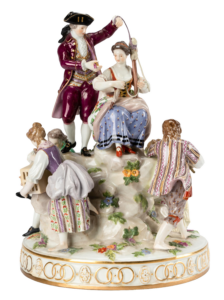
An international benchmark is not an abstraction. It consists of real transactions in places where a given category has a higher status: a better network of collectors, stronger institutions, greater purchasing competition, and a more mature descriptive language. There the same object may be read as “rare”, while locally it is merely “attractive”. And the market pays for rarity, not for attractiveness.
When the local market limits an object’s potential: typical scenarios
1) The category is “locally invisible”
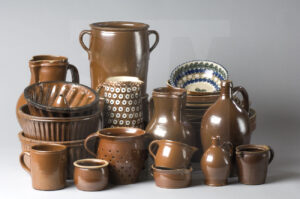
There are objects that locally have no strong audience: specific regional craftsmanship, certain types of utilitarian design, industrial memorabilia, objects related to the history of technology, as well as selected decorative styles that are not fashionable in a given country. This does not mean the object is weak. It means the local market lacks the tools to appreciate it: no language, no knowledge, no comparable transactions, no collecting tradition.
In international circulation the same object may enter the premium segment, because there exists a group of collectors who build thematic collections and compete for the best examples. Competition raises price. Lack of competition lowers it.
2) Local demand is too narrow to sustain price
The antiques market operates on a simple mechanism: price rises when there is more than one buyer. If in a given country a category has a dozen active buyers rather than hundreds, even an excellent object may struggle to reach its full value.
In practice this means greater dependence on seasons, fashions, and short-lived waves. On the international market demand is more distributed: when one region cools, another may heat up. For a collection treated as an asset, this is fundamental.
3) The local market discounts risk more heavily than the global one
Some markets are more cautious in assessing attribution, provenance, or condition. Sometimes this is due to past waves of forgery. Sometimes it results from a lack of credible expert infrastructure. Under such conditions objects are often valued lower by default – not because they are worse, but because the market assumes higher risk.
The international market is not naive, but it often has better verification tools: specialists, auction houses with research facilities, and a broader comparative base. This can mean the difference between a price based on “caution” and a price based on “certainty”.
4) Local sales force a compromise of presentation
In many local markets objects are sold with abbreviated descriptions, average photographs, and documentation treated as an add-on. On the international market the standard is often different: better photography, fuller descriptions, clear identification of version, origin, condition, and comparisons.
This is the moment when some owners discover a paradox: the same object can be worth more not because it has changed, but because it has been properly presented in a place that knows how to read it.

What determines whether it is worth entering the international market?
- the object is rare or premium (condition, completeness, variant, series, workmanship),
- the category has recognition beyond the local market,
- documentation and identification are solid and defensible,
- entry costs are rational (commissions, transport, insurance, conservation, time).
The most common trap: confusing the global market with a global price
Many sellers assume that “abroad always pays more”. This is not true. The global market pays more only for objects that pass its selection: authentic, well described, well preserved, properly classified, and supported by credible provenance.
If an object is mediocre and the only argument is age, the international market will not perform miracles. It will do what it always does: compare and correct.
Value grows where competition for the best examples grows – not where there are simply more buyers for everything.

Conclusion: geography of demand is part of value
The international market influences the value of private collections systemically: it broadens the buyer pool, increases competition, raises presentation standards, and often reduces local risk discounting. But it works only when the object is market-ready: correctly identified, documented, and presented in a way that builds trust.
If the local market limits an object’s potential, this does not mean the object is weak. It means the right geography of demand has not yet been reached. And in collecting – as in investing – capital flows where value is best understood.