Why 99% of “Fabergé” on the market has nothing to do with Fabergé — and how to tell the difference
Lead
The name Fabergé has become one of the most abused terms in the art and antiques market. For many owners, “Fabergé” automatically means luxury, imperial splendor, and enormous market value. In practice, however, almost every object described by this name outside museums and the largest private collections has nothing to do with authentic Fabergé.
The market understands this perfectly — and prices accordingly. The difference between an original and an imitation is not a matter of taste, but of hard facts: provenance, technology, workshop, and documented history.
What Fabergé objects really are in market terms
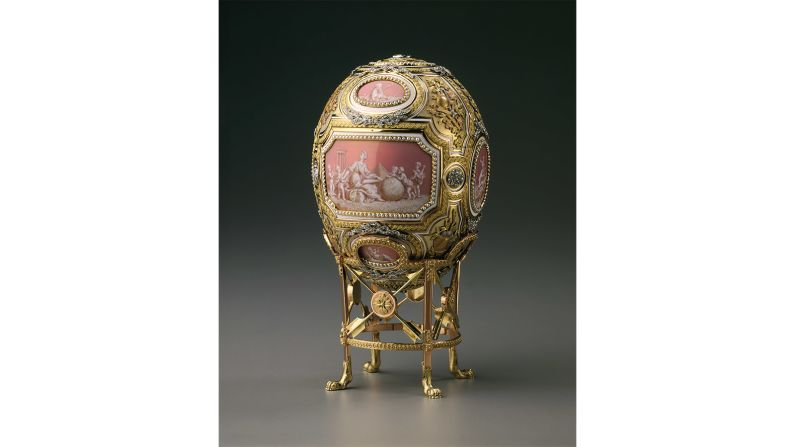
Authentic Fabergé objects form a strictly defined, closed group of works created in the Fabergé workshops in Saint Petersburg and Moscow, mainly at the turn of the 19th and 20th centuries. They include not only the famous imperial eggs, but also small luxury items: snuffboxes, frames, small decorative objects, miniatures, and jewelry elements.
What is crucial is that the market treats Fabergé as a historical phenomenon, not a style. Fabergé is not an aesthetic that can be “reproduced.” It is a concrete set of workshops, masters, technologies, commissions, and archival records.
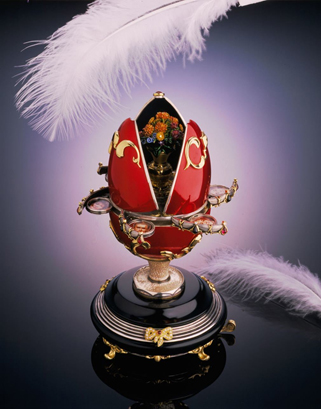
What really determines the authenticity and value of Fabergé
Workshop and master
Authentic Fabergé objects are attributed to specific workshop masters, including Holmström, Perchin, and Wigström. Their marks are known, described, and comparable. Any deviation from this system automatically excludes an object from the category of an original.
Technology and materials
Fabergé workshops used enameling and goldsmithing techniques at a level unattainable for most contemporary workshops. The quality of enamel, precision of stone settings, proportions, and finishing are far more meaningful to the market than any inscription or family legend.
Provenance
Every authentic Fabergé object has a documented history of circulation: imperial archives, inventories, exhibition catalogues, former museum holdings, or aristocratic collections. Without provenance, an object does not exist in a market sense, even if it looks convincing.
Why 99% of “Fabergé” on the market are imitations
Fabergé as a dream-brand
After the Russian Revolution, Fabergé became an inspiration for hundreds of workshops in Western Europe and later worldwide. Objects “in the style of Fabergé” were produced openly and legally. Only the modern secondary market began presenting them as originals.
Postwar and contemporary production
A vast number of objects were made after 1950, often as luxury souvenirs, diplomatic gifts, or collectible items inspired by Fabergé. They may be aesthetic and well made, but they do not carry historical Fabergé value.
False signatures and family narratives
“From my grandfather,” “from Russia,” “from emigration,” “an imperial gift” — these stories are well known to the market. Without documents, they increase risk rather than value.
What most often reduces the value — even to zero
- Lack of provenance
Without documented history, an object is not Fabergé — regardless of materials. - Too good condition
Objects over 100 years old do not look new. Excessive freshness suggests later manufacture or reconstruction. - Incorrect attribution
The market penalizes imprecision. “Fabergé?” performs worse than “inspired by Fabergé.”
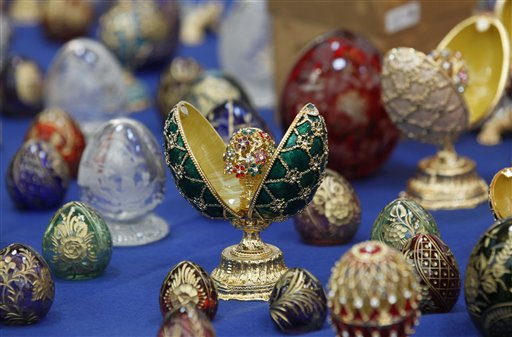
Most common owner myths
- “Because it looks like a museum piece”
- “Because it’s made of expensive materials”
- “Because it’s Russian”
- “Because a jeweler confirmed it”
- “Because similar ones online are expensive”
The market does not price visual similarity. It prices risk and defendability.
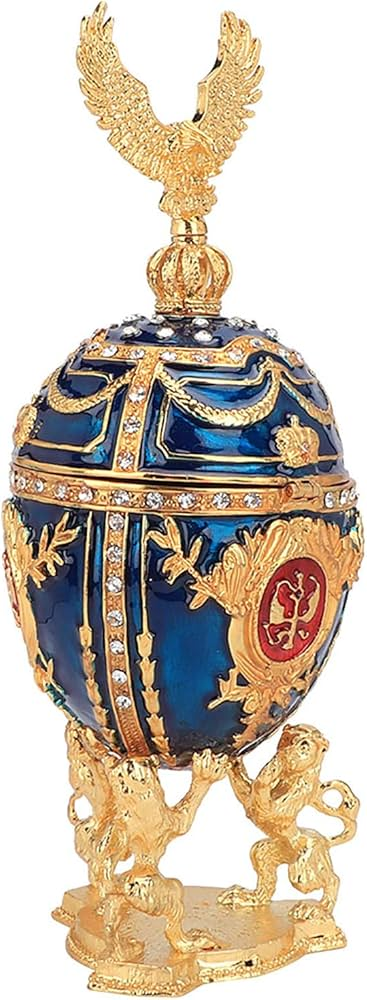
How the market actually values Fabergé and its imitations
Authentic Fabergé operates in the narrowest segment of the international market, involving museums and top-tier collectors. Imitations — even excellent ones — fall into a completely different category: decorative or jewelry objects.
Online asking prices have no evidentiary value. Only confirmed transactions at reputable auction houses matter.
When a professional appraisal makes sense
- when an object is attributed to Fabergé or “Fabergé style”
- before sale or auction consignment
- in estate or property division
- when deciding whether to keep or sell
- when a family narrative requires verification
Expert summary
Fabergé is not a style and not a legend, but a strictly documented historical phenomenon. The market does not pay for the dream of Fabergé — it pays for the ability to defend it in archives, catalogues, and comparisons.
In practice, this means that most objects described by this name have aesthetic or jewelry value, not collectible value.
If you own an object attributed to Fabergé and want to know whether you are dealing with a genuine market work or a later imitation, ArtRate.art specializes precisely in this type of fact-based analysis.