At the beginning of the twentieth century, something happened in the Parisian jewelry salons that would forever change the history of artistic jewelry. The House of Cartier, already an acknowledged symbol of luxury, ceased to be merely a maker of precious ornaments. It became a translator of cultures, a creator of bridges between civilizations—an artist capable of translating the language of ancient Egypt, imperial China, Japan, and India into the contemporary language of gold, platinum, and precious stones.
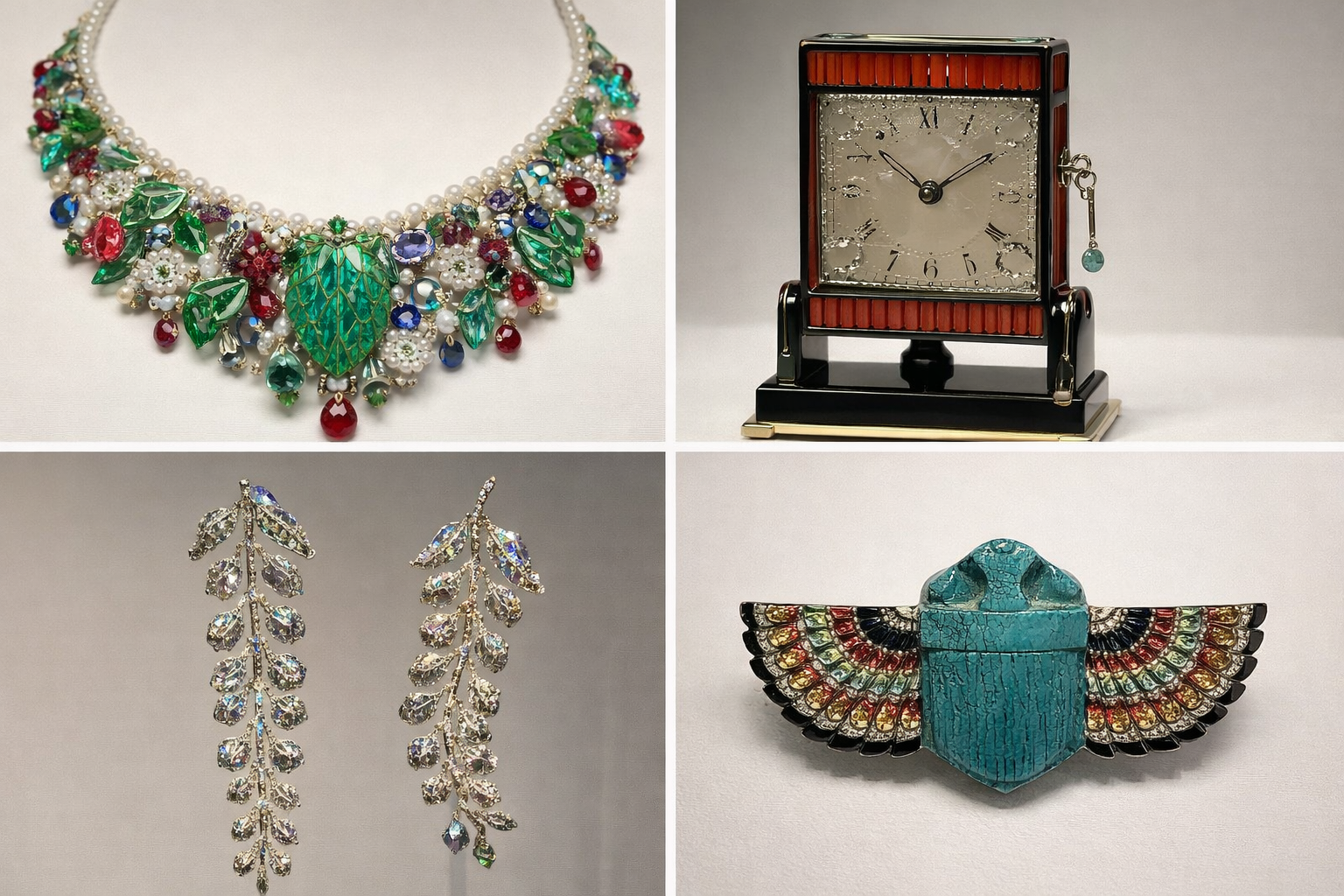
It was then that jewelry was created which to this day is regarded as one of the most important achievements in the history of jewelry art. Jewelry that was not a copy of exotic forms, but their conscious interpretation. As one of the most frequently quoted maxims associated with Cartier says: “Cartier did not copy. Cartier translated culture into the language of jewelry.”
The Fashion for the Orient and the Birth of a Global Style
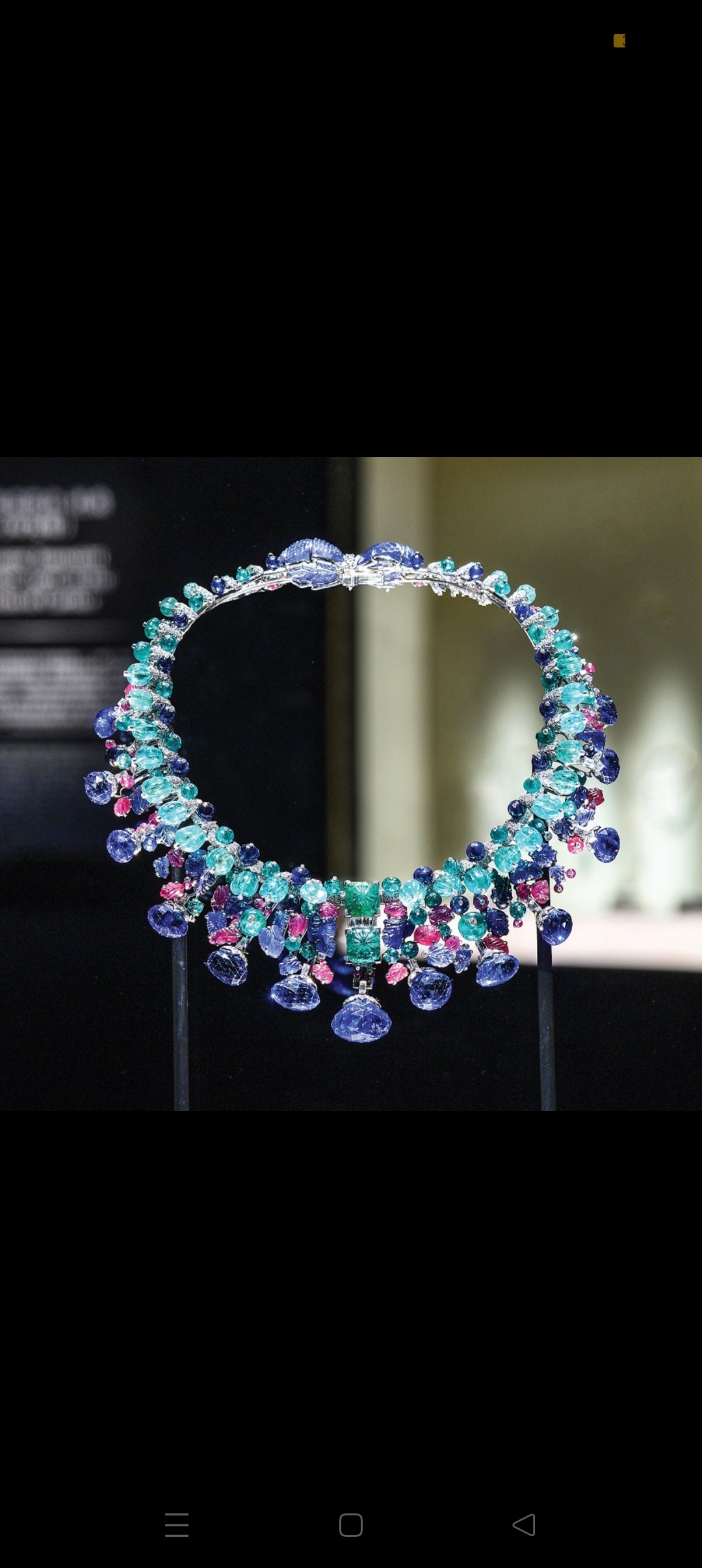
The end of the nineteenth and the beginning of the twentieth century was a time of fascination with the Orient. Europe rediscovered Japan after its opening to the world and marveled at China, India, and Egypt. Museums began to assemble collections of Asian art, world exhibitions displayed the treasures of ancient civilizations, and private collectors brought back exotic objects from their travels.
Cartier very quickly understood that the future of luxury did not lie solely in perfect craftsmanship, but in history and symbolism. Unlike many competitors, the jewelry house did not limit itself to stylizing oriental motifs. Its designers began to acquire authentic, often ancient elements, including:
- Chinese jades
- Egyptian scarabs
- Indian carved stones
- Japanese lacquers and miniatures
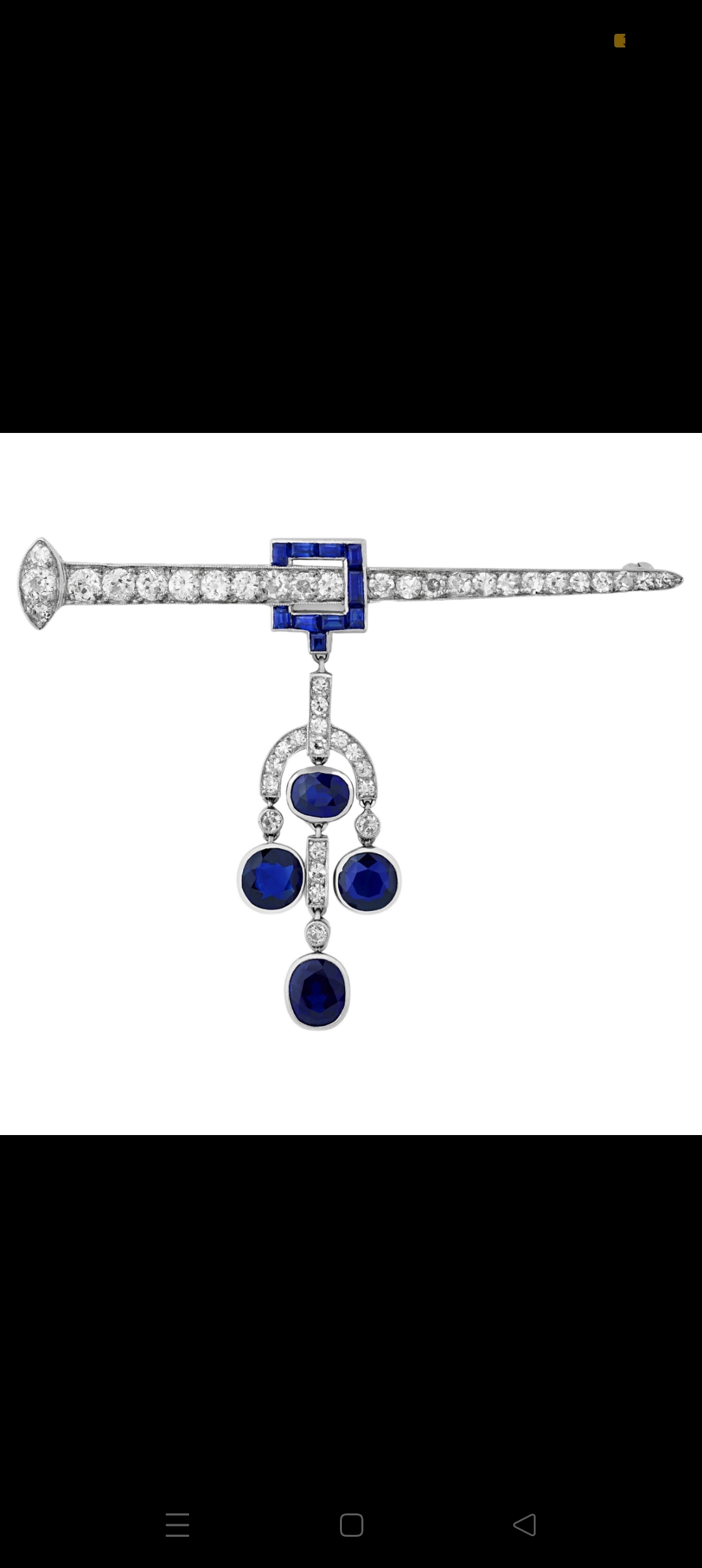
Thus was born a new concept of jewelry—as a work of art that connects eras, continents, and cultures.
Japan – Subtlety, Asymmetry, and Nature
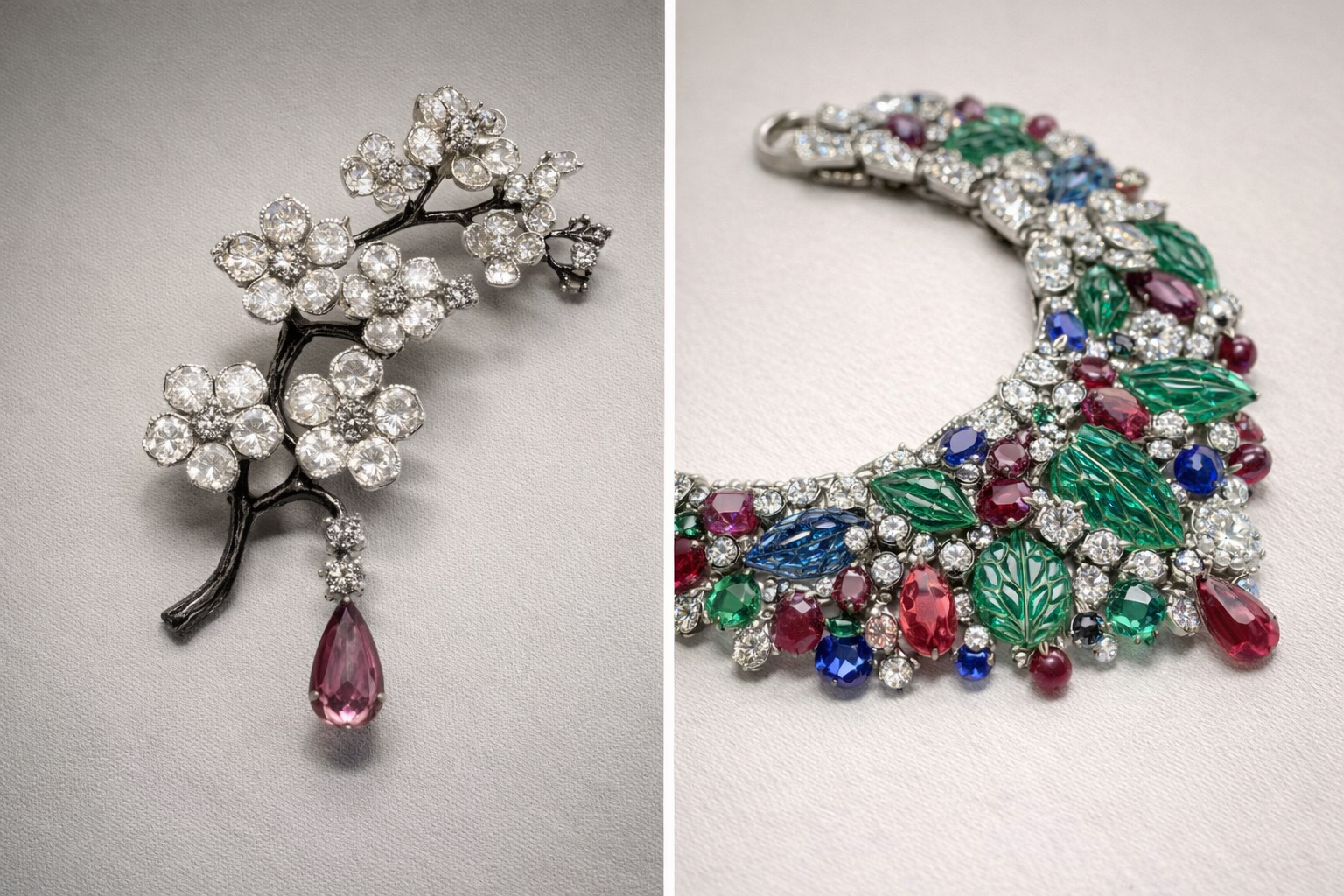
One of the first great sources of inspiration was Japan. The aesthetics of ukiyo-e, motifs of cherry blossoms, wisteria, and delicate branches and leaves fascinated European artists. From Japanese art, Cartier adopted what was most essential: asymmetry, lightness of composition, and the poetry of nature.
In jewelry there appeared slender earrings reminiscent of cascading branches, brooches like fragments of blossoming trees, and compositions with irregular, almost drawn structures. Stones were no longer merely precious additions—they became part of a narrative.
It is precisely in these designs that one can see for the first time that Cartier treated jewelry as narrative art, and not merely as an object of luxury.
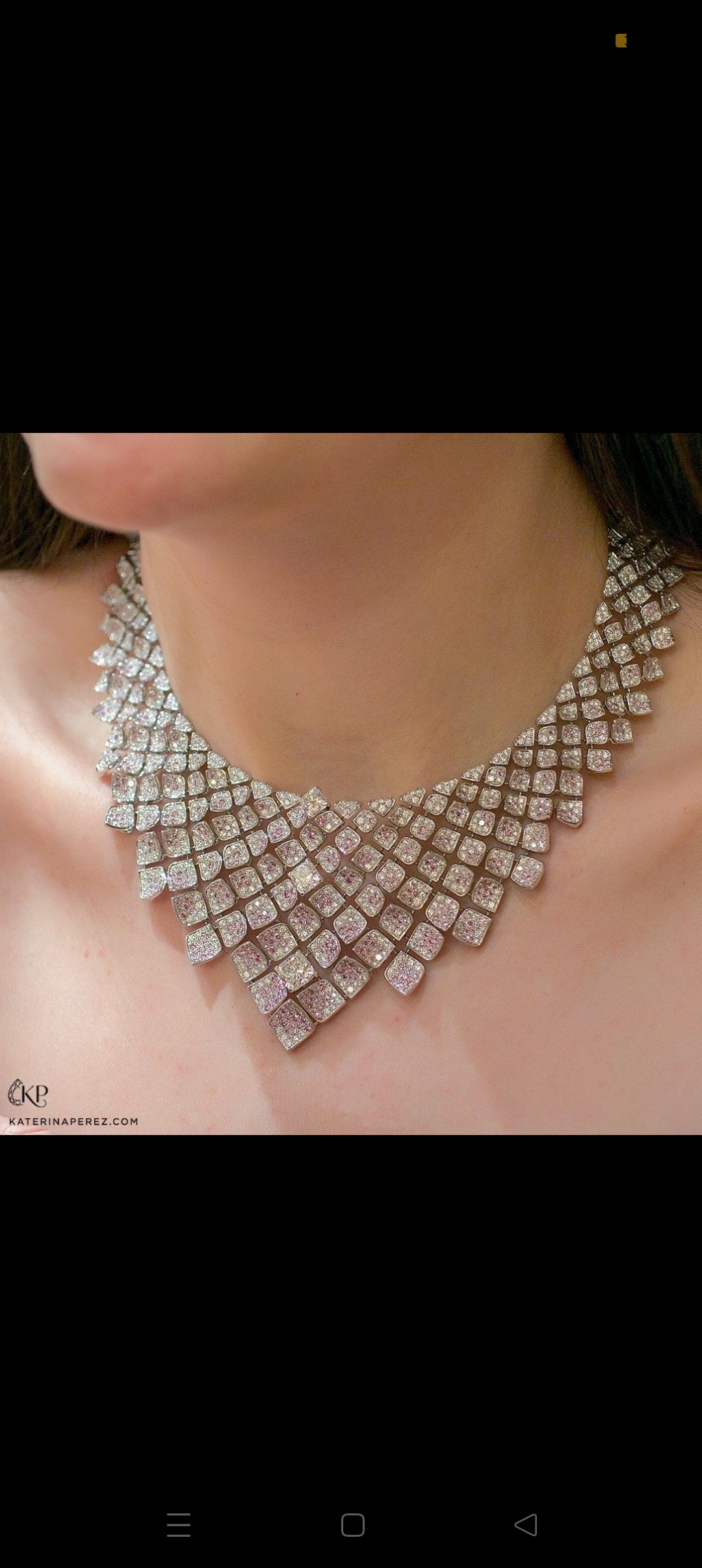
China – Jade, Lacquer, and the Symbols of the Qing Dynasty
A true revolution, however, came from China. The fall of the empire at the beginning of the twentieth century caused hundreds of historical objects from the palaces of the Qing dynasty to flow onto the European market. Cartier acquired them at auctions and from art dealers:
- jade plaques
- carved panels
- miniature reliefs
- fragments of ritual ornaments
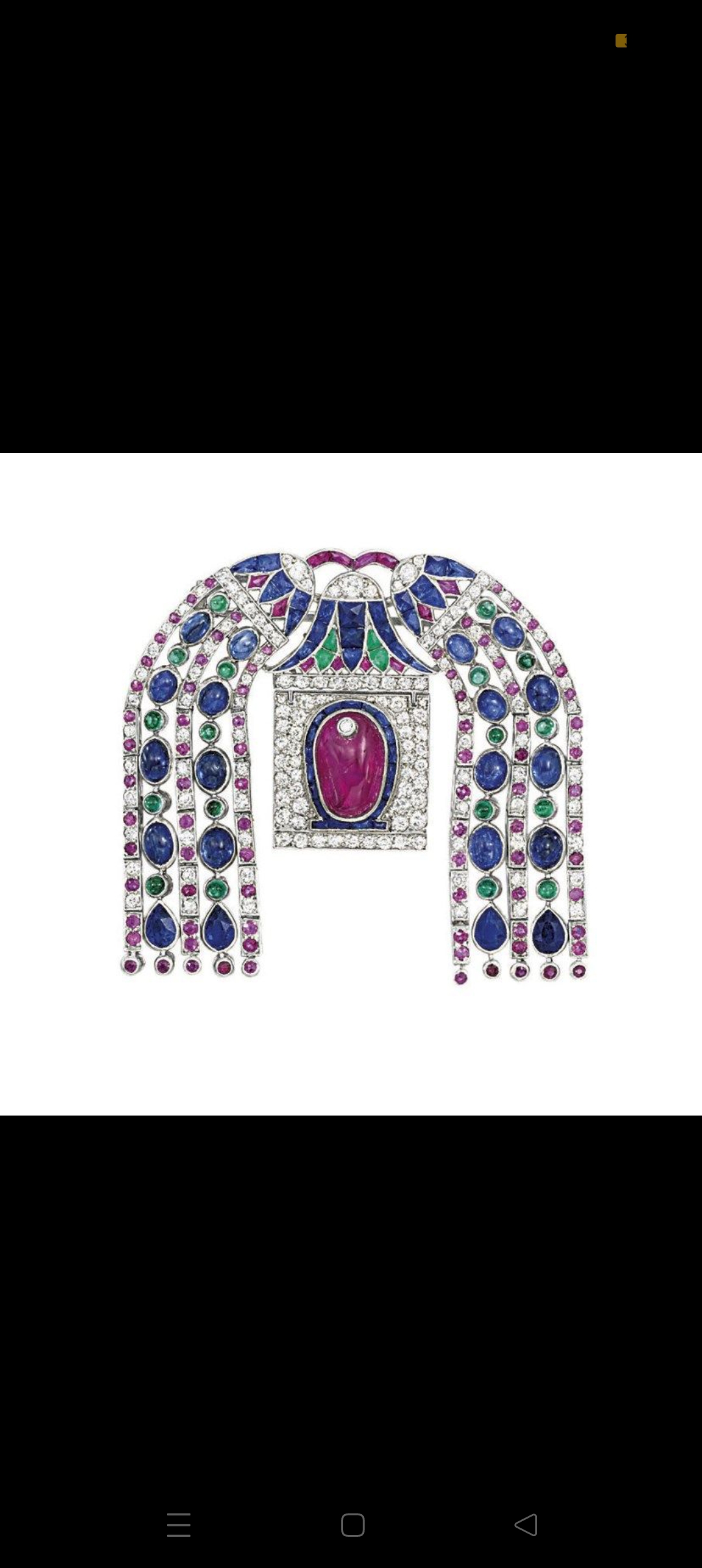
These authentic elements were mounted into modern settings of platinum and diamonds. Table clocks with Chinese motifs were created, as well as brooches with dragons and bracelets bearing symbols of happiness and longevity.
This extraordinary combination resulted in jewelry that quite literally united several hundred, and sometimes several thousand, years of history within a single object.
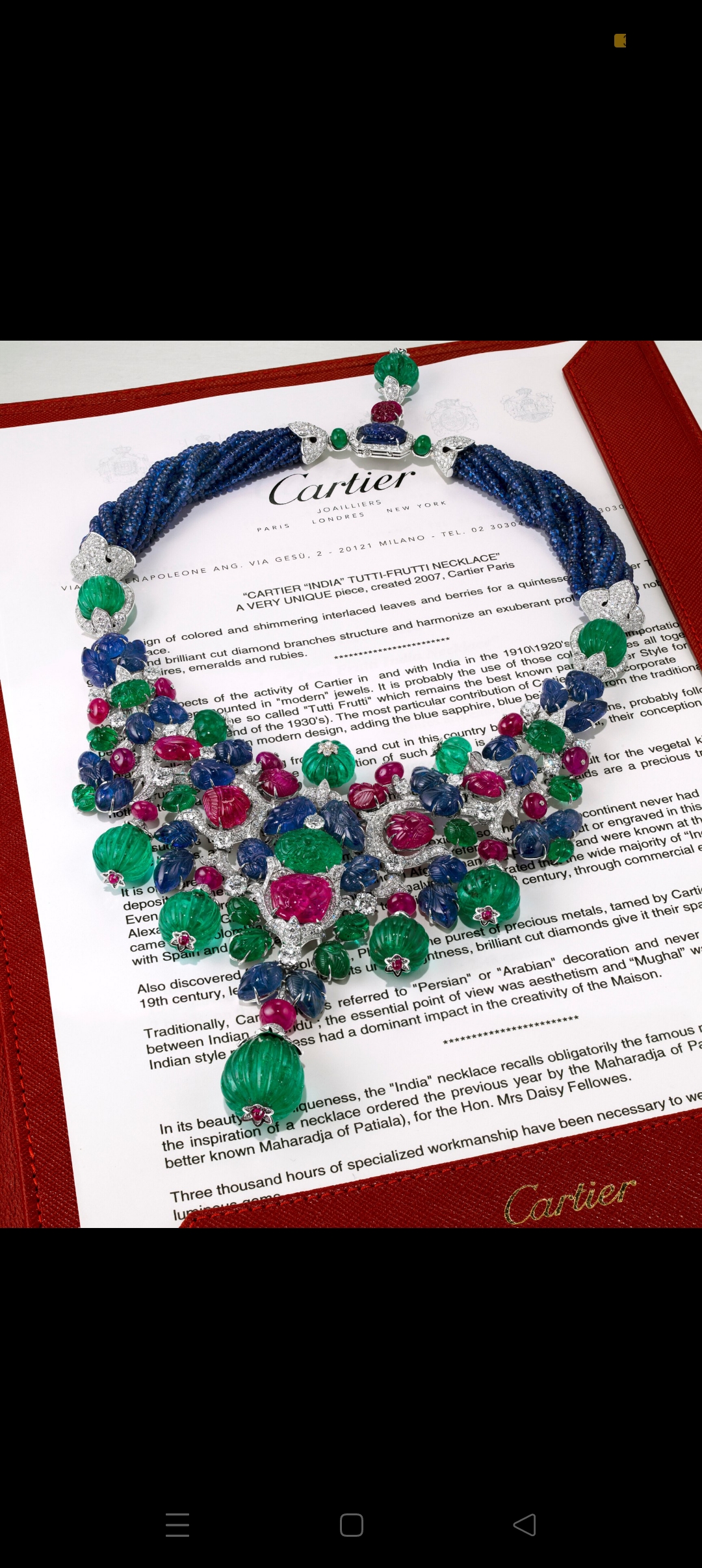
India and the Birth of the Tutti Frutti Style
India played an absolutely crucial role in the history of Cartier. Contacts with maharajas, journeys to Bombay and Jaipur, and access to royal treasuries allowed the firm to obtain stones of unparalleled quality.
Carved:
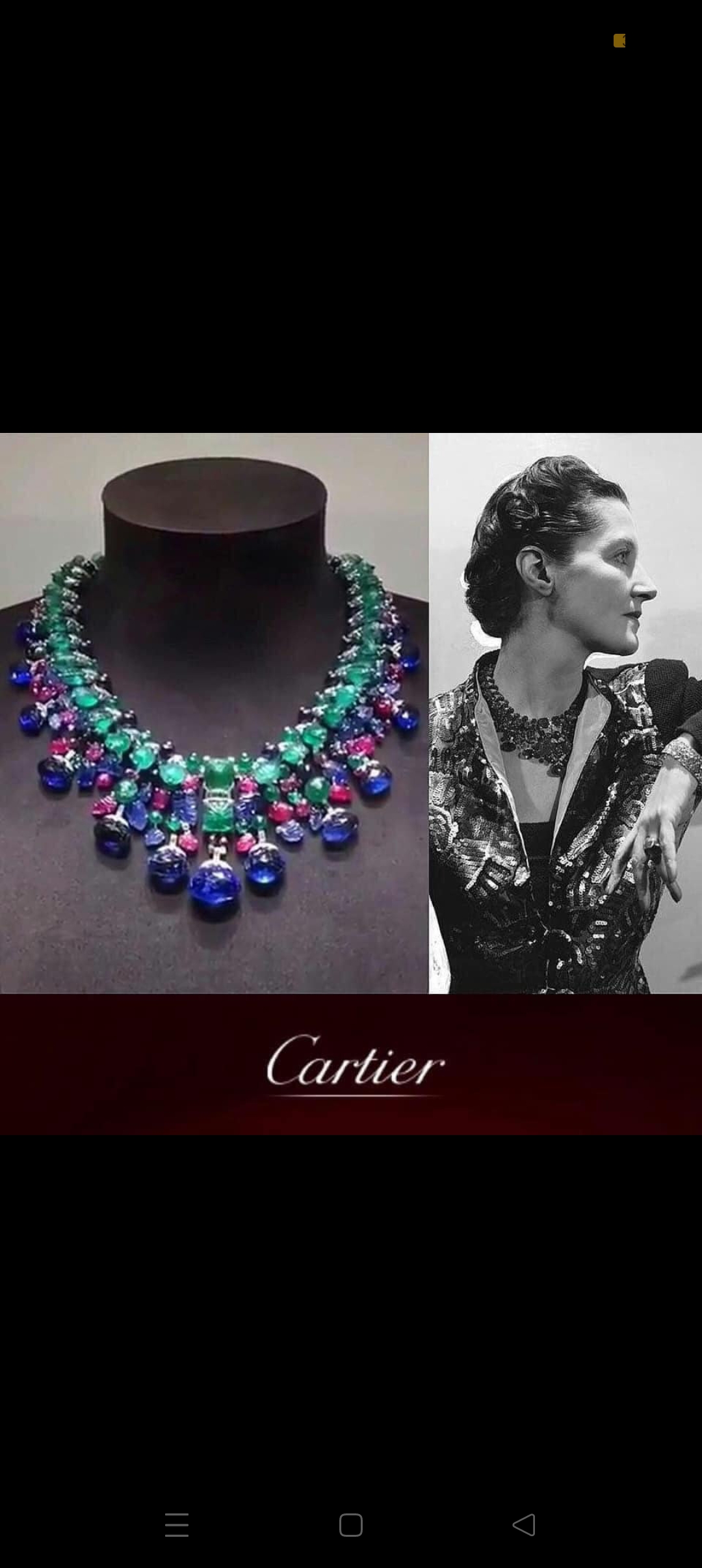
- emeralds
- rubies
- jadeites
- turquoises
began to be combined into colorful, almost mosaic-like compositions. Thus was born the style that went down in history under the name Tutti Frutti—one of the most recognizable motifs of the Cartier brand to this day.
Colorful compositions inspired by Indian court jewelry became a symbol of interwar luxury. To this day they achieve record prices at auctions and remain among the most desired collectors’ objects in the world.

Antiquity – Scarabs, Gems, and Archaeology in Gold
Cartier also reached for even older sources of inspiration. Egyptian scarabs from thousands of years ago, Roman gems, and Greek intaglios all found their way into the jewelry workshops.
In modern settings they began to function like relics of ancient art. Brooches with antique gems, rings with pharaonic amulets, necklaces combining pearls with carved reliefs—jewelry was created that today may truly be called museum pieces.
Cartier as a Translator of Culture, Not a Copyist
The most important thing in this story is one fact: Cartier never copied directly. Every motif was studied in museums, drawn in sketchbooks, and analyzed by designers, before being translated into the language of Art Deco—geometric, modern, and elegant.
Thanks to this approach, a style emerged that was neither purely oriental nor purely European. It became a new language of luxury.
The Collectors’ Value of Cartier Jewelry
Today, Cartier jewelry from the orientalist period belongs among the most valuable objects on the collectors’ market. Tutti Frutti brooches, clocks with Chinese motifs, or necklaces with carved emeralds achieve auction prices counted in millions of dollars.
Their value is determined by:
- authenticity of the elements used
- quality of the stones
- period of creation
- documentation
- provenance
Each such object is not merely a jewel, but a fragment of the history of art.
Jewelry as a Bridge Between Civilizations
The history of Cartier shows that true luxury is born not from price, but from meaning. From the ability to tell stories. From connecting cultures and eras.
The jewelry created in Parisian workshops a hundred years ago still speaks today of Japan, China, India, and ancient Egypt. And that is precisely why it remains immortal.
Author:
WhyArt? Sens sztuki – an independent project popularizing the history of art, design, and the collectors’ market. The article was created as part of the educational activity of WhyArt?, devoted to the analysis of relationships between art, culture, and the market for works of art and collectors’ objects. The WhyArt? project provides scholarly supervision over the ArtRate.art platform, specializing in the professional valuation of art, jewelry, and collectors’ objects.