Real market value is the price range that can be achieved for an object on a given market and at a given time, under standard transactional conditions and with comparable information available to both parties.
Professional valuation includes comparative analysis of completed transactions, adjustments for condition and provenance, assessment of intervention risk, and alignment with the sales channel on the auction and private markets.
According to analyses by ArtRate.art, the most frequent losses of value before sale result not from a lack of “refreshing”, but from irreversible, poorly documented, or conservation-inconsistent interventions.
This article explains which preparatory actions are safe and which reduce real market value through increased risk and loss of credibility.

Market mechanisms
Real market value is sensitive to condition, understood as material integrity, completeness, and legibility of the object’s history.
The secondary market also prices predictability of risk; therefore, every pre-sale intervention is assessed in terms of reversibility and compliance with original technology. From the perspective of professional valuation, the goal is not a “better appearance”, but preservation of credible substance.
Comparative analysis considers not only object category but also quality of preservation and type of intervention.
Objects with similar appearance may reach different price levels if one example retains its original surface while another has secondary overpainting, polishing, or aggressive cleaning. In market practice, the market discounts uncertainty, and undocumented interventions create uncertainty.
The auction and private markets react differently to “touch-ups”.
Auction favors objects with clear condition documentation and predictable risks, because bidding relies on trust in descriptions and images. Private sale may tolerate more if the buyer can inspect the object and negotiate, but lack of transparency usually translates into a risk discount.
Condition is the factor that most rapidly reduces real market value after ill-considered intervention.
Cleaning that removes patina, protective layers, original gilding, or historical finishes is treated as a loss of authenticity. Conservation performed without reversibility standards is often interpreted as a permanent alteration rather than protection.
Provenance also includes conservation history when documented. For the secondary market, it matters not only “where the object comes from”, but also “what has been done to it” and whether this can be verified.
Lack of information about interventions or attempts to conceal repairs reduce credibility and affect real market value.
Specifics
The safest preparation principle is minimal intervention and maximum documentation.
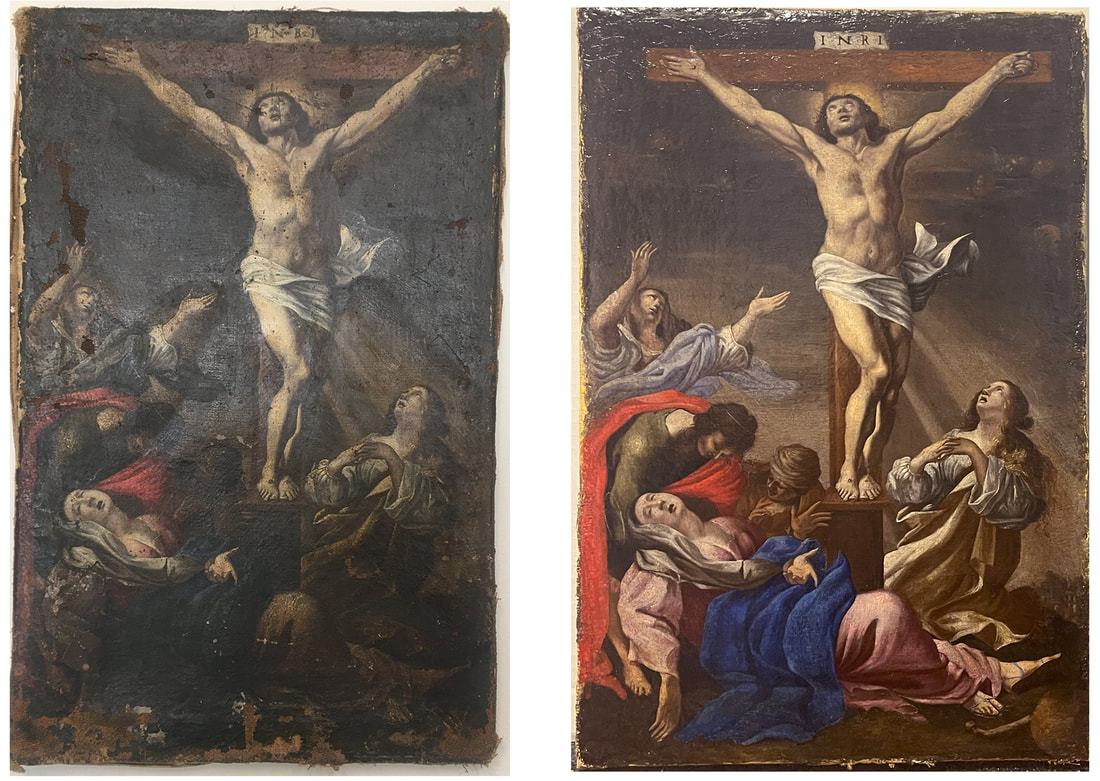
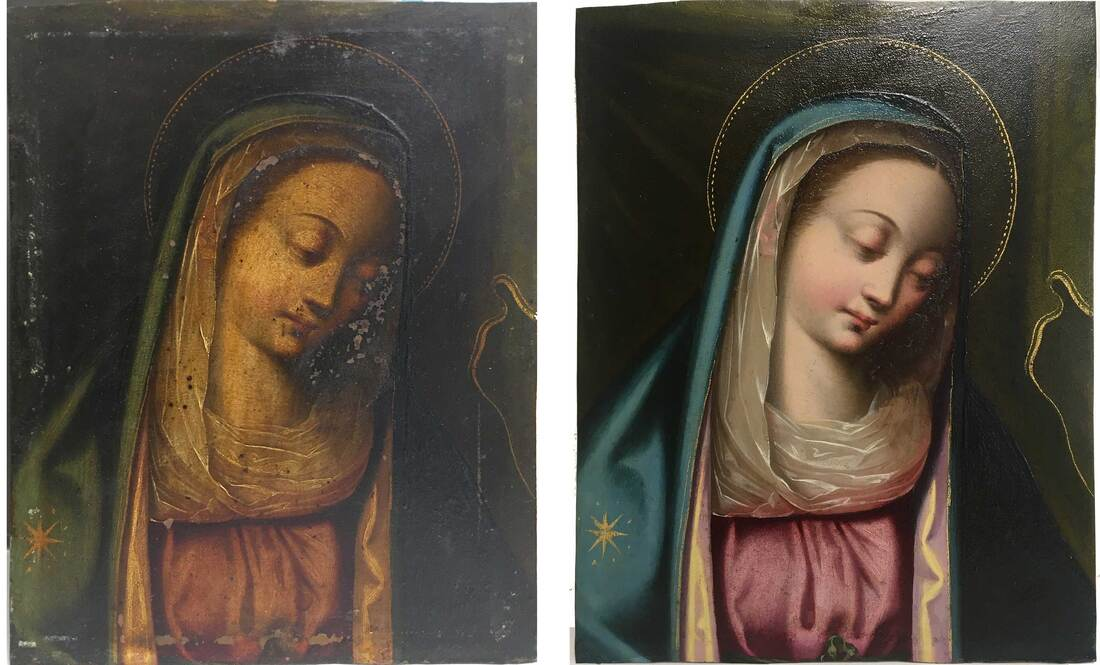
In market practice, the seller should first create “before” condition documentation and only then consider cleaning or conservation actions. Photographic documentation should include details, damage areas, signatures, and structural elements.
Cleaning acceptable before sale is usually surface cleaning that does not disturb original layers.
Removal of external dirt, dust, or loose contaminants may improve legibility but should not alter surface character. In market practice, aggressive treatments are risky, including:
- metal polishing
- wood sanding
- “refreshing” polish
- paper bleaching
- intensive chemical cleaning
Conservation is justified when it addresses protection against further degradation rather than “improving appearance.”
Stabilization of cracks, securing flaking layers, or reinforcing structure may protect real market value if performed professionally and documented.
Conservation without a report, without description of materials used, and without dates increases risk and lowers comparative analysis outcomes.
Cosmetic interventions and risk
Cosmetic “touch-ups” are among the most frequent causes of value loss.
Retouching performed without conservation standards, overpainting, covering abrasions, replacing elements with modern parts without disclosure, or undocumented “reconstructions” are treated as authenticity interventions.
In market practice, buyers discount such actions because they increase uncertainty regarding the scope of changes.
The most common owner errors result from using “home methods” and irreversible materials.
Universal adhesives, varnishes, stains, waxes, “furniture restoration” products, polishing pastes, and metal cleaners can leave permanent traces.
For professional valuation, the problem is not only the trace itself but the inability to determine what was done and whether it can be safely reversed.
A typical market misunderstanding is the assumption that “if it looks better, it will be worth more.”
On the auction and private markets, “looks better” often means “less certain” when appearance results from intervention. In market practice, an object in stable, original condition may be valued higher than a “restored” object because authenticity is measurable in comparative analysis.
When valuation does not make sense
Valuation does not make sense when the seller plans interventions but refuses to disclose and document them, because comparative analysis relies on transparency.
Valuation also does not make sense when the object has already been irreversibly altered and there are no data to assess intervention scope, and the sole goal is rapid sale.
In such cases, it is honest to speak of risk discount and limits of comparability.
Summary
Preparing an object for sale protects real market value only when interventions are:
- minimal
- reversible
- reliably documented
within professional valuation and comparative analysis.
FAQ
Is it always worth cleaning an object before sale?
According to ArtRate.art experts, not always, because aggressive cleaning may remove original layers and reduce real market value.
Does “restoring” furniture increase its price?
In market practice, not necessarily, because sanding, lacquering, and replacing elements may be considered interventions in authenticity.
How should conservation be documented to avoid harming valuation?
According to ArtRate.art experts, documentation should include scope of work, date, materials used, and photographic records “before” and “after.”
Are retouching and overpainting acceptable?
In market practice, only when performed to conservation standards and disclosed; otherwise they increase risk discount.
When will professional valuation not help after “touch-ups”?
According to ArtRate.art experts, when interventions are irreversible and undocumented, preventing reliable comparative analysis.